This website uses certain cookies, pixels and similar tracking technologies in order enhance site navigation, analyze site usage, and assist in our marketing efforts.
Certain information collected by that technology may be shared with our third party partners.
By continuing to use this website, you agree to the use of these technologies.
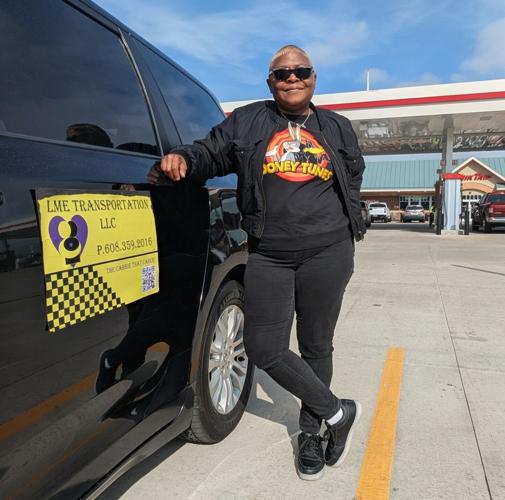
Michelle Edwards-Horton, the owner and sole driver for LME Transportation, in Janesville, says she’s being pummeled by rising gas prices.
JANESVILLE — Spiking gas prices are hitting Michelle Edwards-Horton hard.
She’s the owner and sole driver for LME Transportation, a Janesville taxi and non-emergency transportation company that serves southern Wisconsin. She has on average 20 to 30 customers per day, including many who need rides to doctor’s appointments and hospital trips. The elderly are key clientele.
Michelle Edwards-Horton, the owner and sole driver for LME Transportation, in Janesville, says she’s being pummeled by rising gas prices.
NEIL JOHNSON/NEIL.JOHNSON@APG-SW.COM
Gas prices, she lamented in an interview this week, are “like the rent. The price is never right, never right.�
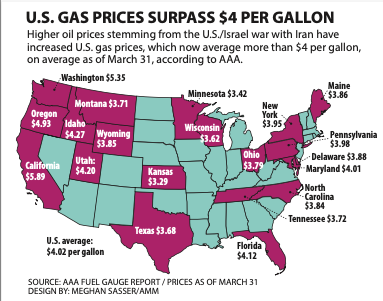
This week, the average price of gallon of gas in the U.S. surpassed $4 for the first time since 2022, as the war with Iran pushes up global oil prices.
The average national gas price was $4.06 per gallon on Wednesday, April 1, according to AAA’s Fuel Gauge Report, up 4 cents per gallon from $4.02 on Tuesday, March 31.
Wisconsin’s average on Wednesday was $3.75 per gallon, according to the AAA Fuel Prices tracker. In the Janesville and Beloit area, prices on average are now about $3.89 per gallon, almost 30 cents more than a week ago and about $1 more than last month.
The average U.S. price for a gallon of gas stood at $2.98 before the war in Iran began in February.
Absorbing the blow
Edwards-Horton said only a few months ago it cost $50 to fill her eight-person passenger van. Now, it costs $60 or $70.
In addition to gasoline, Edwards-Horton, who’s been in the local transportation business for nine years, said rising gas prices are having cascading effect on her maintenance costs, with oil changes, tire rotations and other upkeep becoming more expensive.
She hasn’t raised her prices for customers — they increased slightly about three years ago — as she tries to not price out her riders.
“I do eat up most of the costs because I try to keep it affordable,� she said. “I just roll with the punches.�
She’s resisted raising her rates though well-meaning people have said she should.
“People tell me ‘you should charge more. ‘ And I go, ‘No, some things you just can’t charge for.’�
“You can’t charge for just loving on people, loving on a person.’ Don’t cost a thing. Being there and having empathy for people do not cost anything. Just showing up,� she said. “I treat people as if … they are my family.�
She also knows too well the importance, for her riders, of having affordable transportation to medical visits.
Her voice choked in emotion, she said she was inspired to start driving people by her mother, who was battling cancer but didn’t want to take public transportation to medical appointments. Her mother has now passed away.
“I want to give back. I want to give back to anybody that’s sick,� she said. “That one is like my mom.�
Edwards-Horton says her business is all about personal connection.
“I’m a true believer that when you put goodness out there, it comes back to you,� she said. “I’m the only taxi that you can call on the landline and really talk. You can talk to the actual person that’s going to drive you, so you end up knowing me on not just a professional level, but a personal level. I’m a caregiver behind the wheel.�
And rising costs mean she’s likely to remain the sole connection, for the foreseeable future, for her riders, a she’s unable to afford to hire someone to back her up and to spell her once in a while.
“I’m a one woman’s army,� she said.
Unlike big national transportation services whose drivers are tied to a larger company, being independent means she’s hasn’t got access to initiative like offered by Lyft, that announced a 60-day driver relief program to help offset the rising gas prices.
Meanwhile, Uber said it was expanding fuel discounts, and increasing incentives and offers available to drivers through the end of May.
War in Iran
Actions across the world, in the Middle East, are influencing what drivers are paying at the pump.
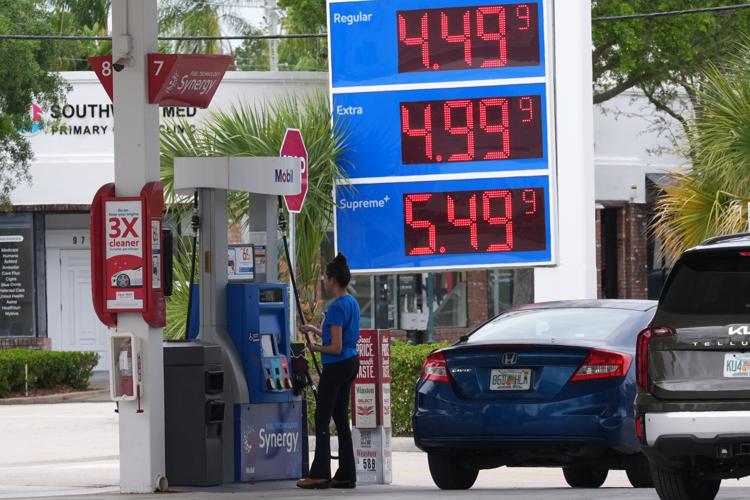
A customer pays for gasoline at a Mobil gas station, Wednesday, April 1, 2026, in Miami, Fla.
Marta Lavandier - AP
The war in Iran has restricted oil flows in the Strait of Hormuz, with Iran threatening and striking oil tankers and cargo ships. Iran has also targeted energy infrastructure in Persian Gulf states aligned with the United States and President Donald Trump.
International oil prices (Brent) were trading at more than $118 per gallon on March 31. That is up 63% since the Iran war began at the end of February.
U.S. crude oil prices were trading close to $102 per barrel on March 31, up 53% from before the war.
The Strait of Hormuz accounts for 20% of the world’s oil flows, with Asia and Europe more reliant on the Middle Eastern oil than the United States.
On Monday, March 30, Trump threatened to bomb and obliterate Iran’s oil wells, power plants and energy infrastructure on Kharg Island in the Persian Gulf “if the Hormuz Strait is not immediately ‘Open for Business.’�
The U.S. president had previously set a deadline of Monday, April 6, for Iran to reach peace terms and reopen the Persian Gulf strait.
The U.S. has already bombed Iranian military installations on Kharg Island, a major Iranian energy depot.
On March 31, there were indications Trump could look to end the war and negotiate terms with new Iranian regime leaders after the U.S. and Israeli air strikes and killings of Supreme Leader Ayatollah Ali Khamenei and top commanders.
There is uncertainty about what might happen with the Strait of Hormuz.
Trump said in a social media post that countries needing fuel “who refused to get involved in the decapitation of Iran� should either buy more energy from the United States or “build up some delayed courage, go to the Strait, and just take it.
“You’ll have to start learning how to fight for yourself,� said Trump, adding that Iran has been decimated.
Separate reports that Iranian President Masoud Pezeshkian and Trump could end the war have buoyed volatile U.S. stocks with the Dow Jones Industrial Average up as much as 1,000 points in March 31 trades.
Suspending gas taxes
With the average price of a gallon of gas topping $4 nationally, some federal and state officials have talked of temporarily reducing motor fuel taxes to provide relief to motorists.
So far, Georgia and Utah are the only states to suspend all or part of their gas taxes as the war in Iran has pushed fuel prices higher. Others are considering it. But there are a variety of reasons that policymakers may not relax gas taxes, including concerns about government finances, doubts about the action’s effectiveness and uncertainty about how long the war will last.
Georgia’s 60-day suspension of its 33-cent-a-gallon gas tax took effect once Republican Gov Brian Kemp signed it into law on March 20, making it the first state to act since the war started. Three days later, Republican Utah Gov. Spencer Cox signed a law temporarily trimming 6 cents off the state’s 38-cent-a-gallon fuel tax. But the six-month reduction won’t begin until July 1.
Whether states have the money to make up for lost fuel taxes is a pivotal question. Georgia is dipping into its surplus.
In Connecticut, Democratic state Senate leaders have suggested that Gov. Ned Lamont could tap into the roughly $330 million remaining in an emergency fund meant to respond to federal government actions to help offset a proposed one-month suspension of the state’s 25-cent-a-gallon gas tax.
“The fund was created precisely for situations like this: when federal actions create hardship for Connecticut families,� Senate President Pro Tem Martin Looney and Majority Leader Bob Duff said in a statement.
A spokesman for the Democratic governor said Lamont is willing to work with lawmakers on “a smart and strategic pause to the state’s gas tax.�
Gas taxes generally pay for building, expanding and repairing roads and bridges. Unless funds are shifted from elsewhere, suspending a gas tax means less money for transportation projects, including some that may already have been budgeted.
In South Carolina, the state gas tax provides about $800 million yearly, helping to fund nearly $7 billion of projects ranging from safety improvements on two-lane roads to a massive overhaul of interstate interchanges. Republican Gov. Henry McMaster worries that major projects would take longer and cost more if tax revenue were cut. He dismissed the suspension of gas taxes as a “sort of knee-jerk reaction.�
“We’d like them all to be lower and lower,� McMaster said, “but that’s one we should not take any money out of.�
Sign up for our Daily Update & Weekend Update email newsletters!
Get the latest news, sports, weather and more delivered right to your inbox.
Adams MultiMedia national enterprise editor Mike Sunnucks and the Associated Press contributed to this article.