
JANESVILLE
Inflation at the gas pumps and in the grocery aisles might be driving some local residents to skip more expensive trips and treats.
But others face belt-tightening that’s tougher, and the stakes are higher.
The Janesville community’s most vulnerable—those who are elderly, homeless or on the brink of homelessness—are riding the same price rocket as their more well-heeled local counterparts.
Price spikes
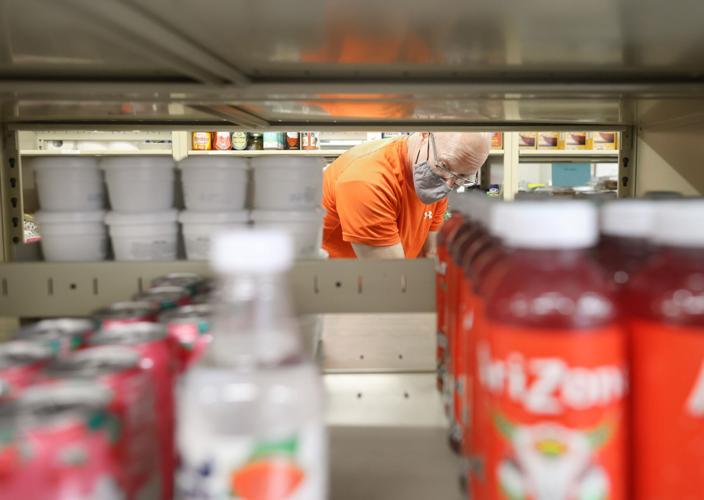
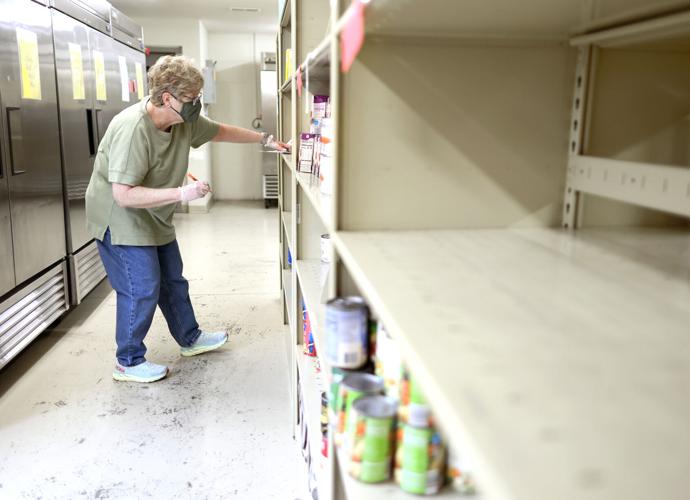
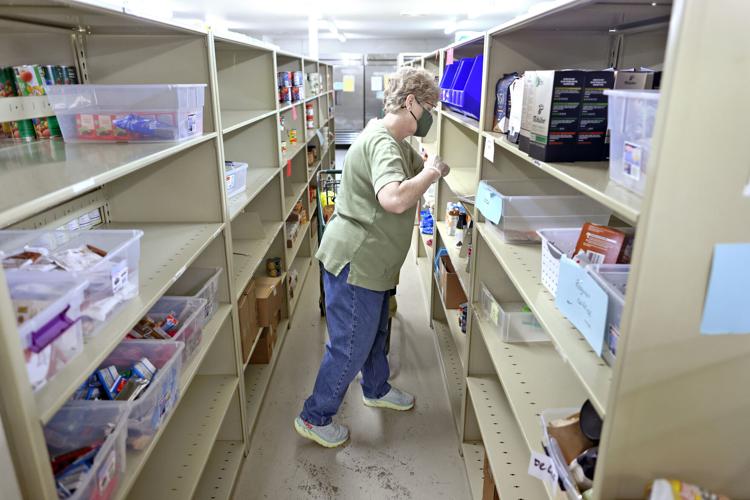
At ECHO, a nonprofit food pantry and social service agency in downtown Janesville, the rising cost of groceries is starting to show itself in ways the pantry hasn’t seen before, both in the cost of common items but also in the scant availability of certain items normally donated to it.
For struggling families, the charity agency is often the last line of defense between a meal on the table and a foodless day. It’s likely to get tougher for ECHO and its clients to stretch donated food if inflation doesn’t soften on staple items like milk, an item that national dairy analysts say has spiked a mind-boggling 55% since this time last year.
On Thursday, a busy food pantry distribution day for ECHO, clients outside the pantry loaded boxes of groceries into beat-up, late-model sedans and pickup trucks they’d fueled up with $4.05-per-gallon gasoline.
Some were returning to homes with rents that have jumped up nearly 20% since the start of the COVID-19 pandemic, according to data from national rental property financial analyst .
ECHO Executive Director Jessica Locher said pantries and public food voucher programs are still rolling out alongside food share vouchers, all part of a patchwork of social programs aimed at helping struggling families piece together a week’s worth of groceries.
Every week.
That’s not getting easier amid inflation that last month hovered at more than 8% on a national average, based on price hikes on everything from rents to gas to quick meals at fast-food restaurants.
Price hikes combined with other common forms of inflation, which are peaking are steadily outstripping the cost-of-living increase in senior citizens’ social security payouts, are leaving people with even less resources as inflation seems stuck in place.
A growing number of ECHO’s clients are living in motels on short-term rent vouchers, both because of rent price hikes and a shortage in local affordable housing.
The last several months, Locher said, some local renters have begun to see their leases go month-to-month or not be renewed, a strategy some landlords are now using to reset rents at higher prices. Others have seen sudden rent hikes of $100 or more month.
“That’s a lot when you’re limited in income or you’re on a fixed income,� Locher said.
This year, she said, ECHO on average is paying out $20,000 a month to place at-risk families in temporary housing at local hotels. That’s a 243% jump over the $70,000 a year that ECHO in the past has budgeted for emergency housing vouchers.
That’s driven by an increase in families experiencing housing instability—not the cost of motel rooms, Locher said.
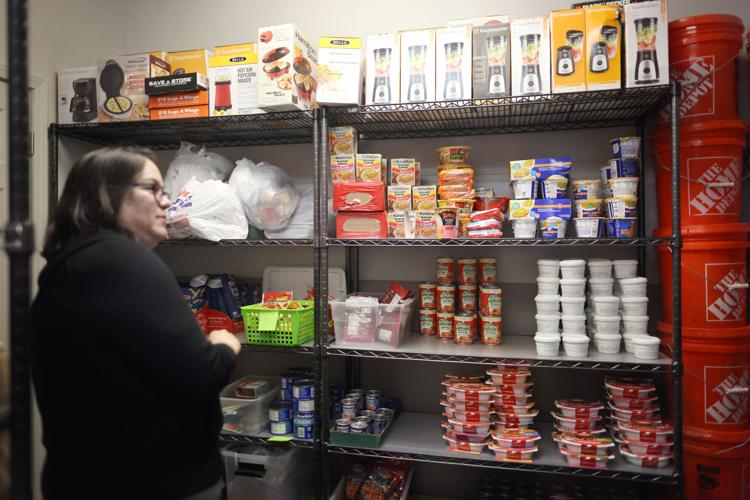
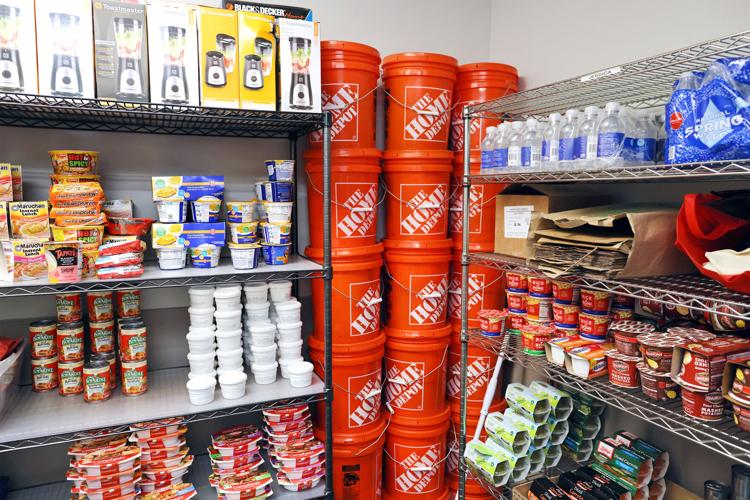
In motel rooms, residents are limited to cooking in microwave ovens, which limits the kinds of foods they can buy or accept from local charities.
ECHO has a dedicated room to store items like heat and eat soups that can be easily made in the microwave.
Almost all the food ECHO receives in its pantry program is provided by donations from local grocers, a model Locher said still fuels the pantry with about a month’s worth of food for its client base.
Volunteers at the pantry said that families with children who were spending $100 to $120 a week on groceries pre-pandemic would now have to spend upwards of $200 a week for the same cartload of groceries.
Ana Boden, a client advocate at ECHO, said she’s concerned that inflation has led to a decrease in donations of some personal care items.
ECHO doesn’t budget to buy those items, and such donations often come from individuals.
Like the gasoline cards ECHO gives to some clients, groceries aren’t stretching as far at those prices. That’s led ECHO to be more strategic in how it combines groceries. The focus now is to bundle foods that let people build meals.
Volunteers said noodles and cream-based soups are good for that, but it’s gotten tougher to roll in fresh or frozen meat to bulk up the dinner table.
The availability of chicken in the pantry’s freezer has been spotty recently at best, they said. That’s likely because of both supply-chain problems and commodity prices that have remained stuck in the stratosphere.
“Right now, it really hasn’t affected our purchasing abilities. Not yet. Donation wise, we are not seeing as much fresh and frozen meat coming in. That may have to do with pressures the grocery industry faces within their own walls,� Locher said.
“I’m hoping businesses can continue to be very generous to us. And I’m hoping that they’ll continue to be able to do whatever, because they’ve done so much good for so long.�


