

JANESVILLE
As a semi-retired health care lobbyist, one-time Janesville City Council member and sometimes local radio talk show personality, Richard Gruber says he’d never encountered raw political partisanship by local public office seekers like he saw in the run-up to last April’s election.
During what was supposed to be a casual chat over coffee with one candidate for a local trustee position in Rock County, Gruber said they casually—but brazenly—flung out their main campaign platform.
The goal wasn’t to balance a local government budget or ensure local roads were maintained, a typical stump.
“He said, ‘the only reason why I’m here is I want to beat that blankety-blankety-blank (U.S. Sen.) Tammy Baldwin. She’s a blankety-blankety-blank, and I don’t like anything about her. And that’s the only reason I’m interested in this,’� Gruber recalls.
The memory still boggles Gruber’s mind—and it finally pushed him to launch the Rock County Civics Academy, a private nonpartisan civics group that he and two friends had been building for the last two years.
The academy is a six-week set of seminars to be held on Tuesday nights starting Sept. 20, aimed at people who are considering running for public office at the town, village, city, county or school board level.
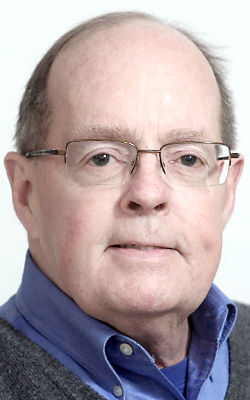
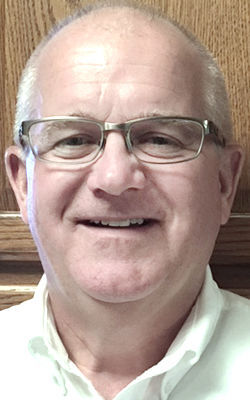
Gruber, DuWayne Severson and Paul Murphy, all former Janesville City Council members, say they’ve seen some local office seekers in the last few years take an increasingly political partisan approach.
The seminars are being offered in the months leading up to the April 2023 local spring election, under the banner “Common Sense Rock County.� It’s an offshoot of Common Sense Reestablished, LLC, a boutique public affairs and policy consultancy service that Gruber, Murphy and Severson quietly launched in 2020.
They three say their aim is to offer people seeking public office a primer in how local government operates, what the duties are—and what the duties aren’t.
The academy is being segmented off into topical panels to be led by people Gruber said make up the “tapestry� of a community, including local educators, youth center volunteers, area journalists and business entrepreneurs.
At the core, the three say, they want to offer a reality check to those who seek to win berths on local boards and councils. The tasks and issues they’ll be charged with in those posts are usually hyperlocal in scope, far removed from the national partisan political tug-of-wars they might see roll out on cable news outlets such as Fox 69ÂÜÀò and CNN.
“Remember Toto in the Wizard of Oz?� Severson said. “Like Toto, we’re trying to pull away the curtain around Oz, the mystery. That’s all we’re trying to do.�
Gruber said his experience last spring with the local office seeker whose apparent goal was to dismantle Democratic U.S. Sen. Tammy Baldwin might be an extreme example. But he said political partisanship has begun to cascade into town halls and county board rooms.
Gruber said it’s evidence that the public’s concept of what is local “politics� has shifted, at a time when fewer people are stepping up to join local governing boards, including for non-government nonprofits.
Gruber said he finds it disheartening that local county and municipal meeting agendas are now frequently front-loaded with resolutions copied straight from high-level national talking points on complex topics such as election security and green energy policy.
Meanwhile, he said, people attending the same local meeting in hopes of catching the vote on a local zoning change, that affects their home or business, must first sit through disjointed partisan-like filibustering on national or global policy matters.
“We’ve lost sight of the fact that these jobs are intended to take care of some really basic things,� Gerber said, and “those things that are absolutely necessary for 64,500 people in town to live together in relative peace and harmony.�
“We’re not here to change what our position is relative to NATO’s involvement in the Ukraine. I mean, I might have a position, but it has nothing to do with what I’m doing if I’m on the city council.�
Murphy said it’s also his hope is that the Civics Academy can, in a pragmatic and simple way, demystify local public office. It’s far less complex than it might appear to those considering filing April candidacy papers, he said.
“How it works is you might go to your son or daughter or grandchild’s soccer game or football game, and somebody’s probably going to come up and question you about something you said or did or that they heard on the radio or in the newspaper or watched on TV. They’ll come right up to you at the grocery store,� Murphy said. “That’s local government.�


