
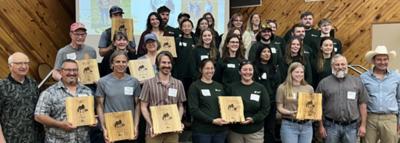
MADISON ��� The Wisconsin Department of Natural Resources (DNR) announced the winners of the 2026 Invasive Species Action Awards, presented by the Wisconsin Invasive Species Council during Invasive Species Action Month. The governor-appointed council advises the DNR and the state legislature on invasive species issues.
The council awards individuals and groups in professional and volunteer settings for their exemplary efforts to prevent the spread of or manage invasive species in Wisconsin.
In the volunteer individual category, Terrie Pohjola works with the Knight Templar Club Reserve, a 2,400-acre reserve on Duck Lake in Langlade County, as Forestry Chairman and a Wisconsin Master Naturalist. She has created maps and set plans for invasive species management for the entire property. She recruits and assigns volunteers to specific areas, prompting them to take a sense of ownership over the management of that area. Under this plan, known garlic mustard populations have been eliminated or controlled, and tansy has been removed from sensitive areas. She works closely with the reserve���s Junior Naturalist Program.
Other volunteer individual winners were: Dick Wieboldt of the Upper Sugar River Watershed Association; Herb Sharpless of the Southern Kettle Moraine area in southeast Wisconsin; and Tom Rogalski of the Upper Lower Webb Lake Association in Burnett County.
The winner of the professional individual category was Wisconsin DNR���s Wetland Invasive Plant Specialist Matthew Puz.
The professional group category had three winners: the Green Bay Conservation Corps; the Oconto County Land and Water Conservation Department; and Sheri Denoski and Chuck Druckery of Marinette County.
Finally, the winner of the volunteer group category was Newport Wilderness Society Invasive Species Volunteers, based in Ellison Bay, Door County.
More information about invasive species and resources for helping to prevent their spread is available on the DNR’s website, .
