
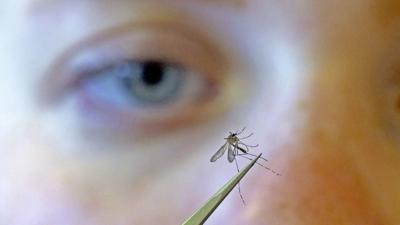
JANESVILLE — For the first time since 2003, there has been a spread of malaria local to the United States, prompting an alert from the Centers for Disease Control and Prevention on Monday. However, Rock County officials are on the lookout another mosquito-borne illness.
Rock County Environmental Health Director Rick Wietersen did not dismiss the potential of malaria transmission in Rock County and the surrounding area, but said the top concern locally is the West Nile virus.
The Wisconsin Department of Agriculture confirmed Wednesday that a 21-year-old horse in Dunn County, just east of the Twin Cities, had tested positive for the West Nile virus.
According to the Wisconsin Department of Health Services, Wisconsin had six confirmed probable human cases of the West Nile virus in 2022. Between 2018 and 2022, there has been an average of 11 cases of West Nile per year, but that is partially attributed to 2018 when there were 33 cases.
West Nile symptoms include sudden high fever, a severe headache, nausea, sore throat, backache and prominent muscle aches.
As for malaria, the CDC alert was prompted by four cases in Florida and one in Texas in the last two months. The CDC is urging doctors, public health officials and the public in general to take precautions and to seek medical treatment if believed to have contracted the disease.
The anopheles mosquito, which is the species that transmits malaria to humans, is not known to have migrated north to southern Wisconsin and northern Illinois. Wiestersen said that species typically only survives in southern states because of sustained hot temperatures, and it is only believed that only rare, isolated incidents may occur with those mosquitoes moving north on semis or freight ships.
“Malaria and the mosquitoes that can transmit malaria are typically found in warmer areas of the world. The southern tier of U.S. states are vulnerable to future malaria outbreaks,� Wietersen said, adding that even if anopheles mosquitoes made it up to the Stateline Area they wouldn’t be able to survive the winter.
Malaria is a mosquito-borne, potentially-fatal disease that infects people through the common bite. It is caused by a parasite that attacks red blood cells. If contracted, people may experience fever, chills and flu-like symptoms. Some people may experience “attacks,� which begin with shivering and chills, and then continue with a high fever and sweating before returning to a normal temperature. Malaria cannot be transmitted from person to person unless it is from mother to unborn child, through blood transfusions or by sharing needles used to inject drugs.
Whether it is local transmission or if travelers return from a foreign country after contracting the disease, malaria can be complicated to diagnose, treat and even to detect. Once parasites enter the body, they travel to the liver and lie dormant for up to a year. After maturation, they leave the liver and infect red blood cells, which is when malaria symptoms surface.
“The difficult part with malaria is that onset of symptoms can be many days, weeks or even months after transmission, making the correlation of common symptoms difficult to correlate to a specific event such as mosquito bites,� Wieterson said. “When people travel to regions of the world where malaria is common.
According to the Mayo Clinic, people should talk to their doctors if they experience a fever while living in, or after traveling to countries with high malaria transmission rates. The CDC urges immediate medical treatment if there is a suspected case of malaria and that hospitals should be prepared to diagnose within 24 hours. According to the CDC alert, all suspected or confirmed locally-acquired malaria are a public health emergency and should be reported to the state or local health department.
Wietersen suggested prevention for any mosquito-borne illness, like using repellents with DEET and eliminating unnecessary stagnant water as that is breeding ground for mosquitoes. The CDC suggests wearing loose-fitting, long-sleeved shirts and pants, as well as using air conditioning and repairing holes in screens.
Monitoring programs
Wieterson and others at the health department have monitored national studies that have tracked other mosquitoes from tropical climates migrating north. One in particular has been the aedes species, which in other parts of the world carries the Zika virus. It has spread to the southern United States, but hasn’t been found with traces of the Zika virus.
“That species has shown a slow movement north as far as the southern tip of Illinois,� Wieterson said.
The Illinois Department of Public Health considers that state to be at a “low risk� for widespread, yearlong transmission of the Zika virus.
Locally, the health department, with help from interns, has a summer surveillance program in which it collects mosquito egg samples from throughout the county. Then staff incubate and grow the mosquitoes to potentially detect disease. The department also monitors ticks.
“One of the main purposes of our mosquito and tick surveillance programs is to monitor for early detection of species not normally native to this area,� Wietersen said.
About 2,000 U.S. cases of malaria are diagnosed every year, mainly from travelers coming from countries where malaria commonly spreads, typically from sub-Saharan Africa and South Asia.
Since 1992, there have been 11 outbreaks involving malaria from mosquitoes in the U.S. with the last one occurRing in 2003. That was in Palm Beach County, Florida, where eight cases were reported.


