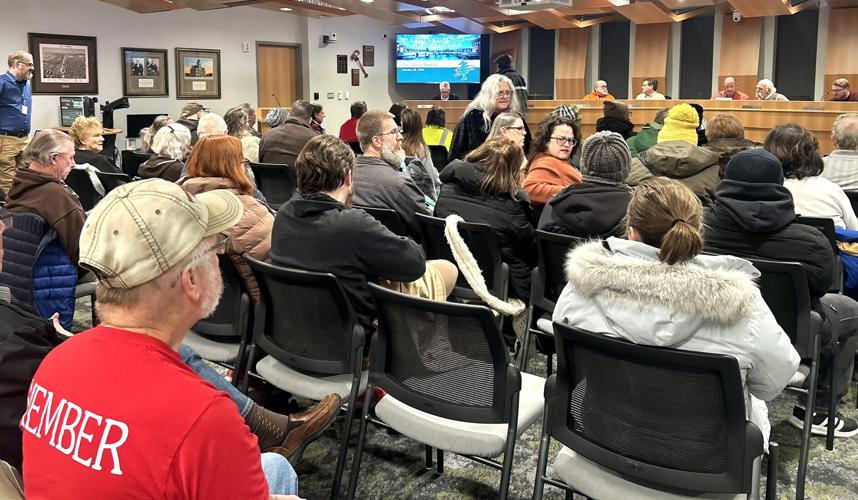
Janesville residents pack a city council meeting Monday, Jan. 26, 2026, at which the council weighed whether to bypass a second reading and public hearing on a proposed development ordinance for the southide GM/JATCO site, and whether to place the measure directly on the April 7 ballot. Both of those measures failed.
Janesville residents pack a city council meeting Monday, Jan. 26, 2026, at which the council weighed whether to bypass a second reading and public hearing on a proposed development ordinance for the southide GM/JATCO site, and whether to place the measure directly on the April 7 ballot. Both of those measures failed.
JANESVILLE — After taking comments from area residents who packed their meeting, a divided Janesville City Council on Monday night didn’t immediately advance a proposed ordinance on future development at the former GM/JATCO site.
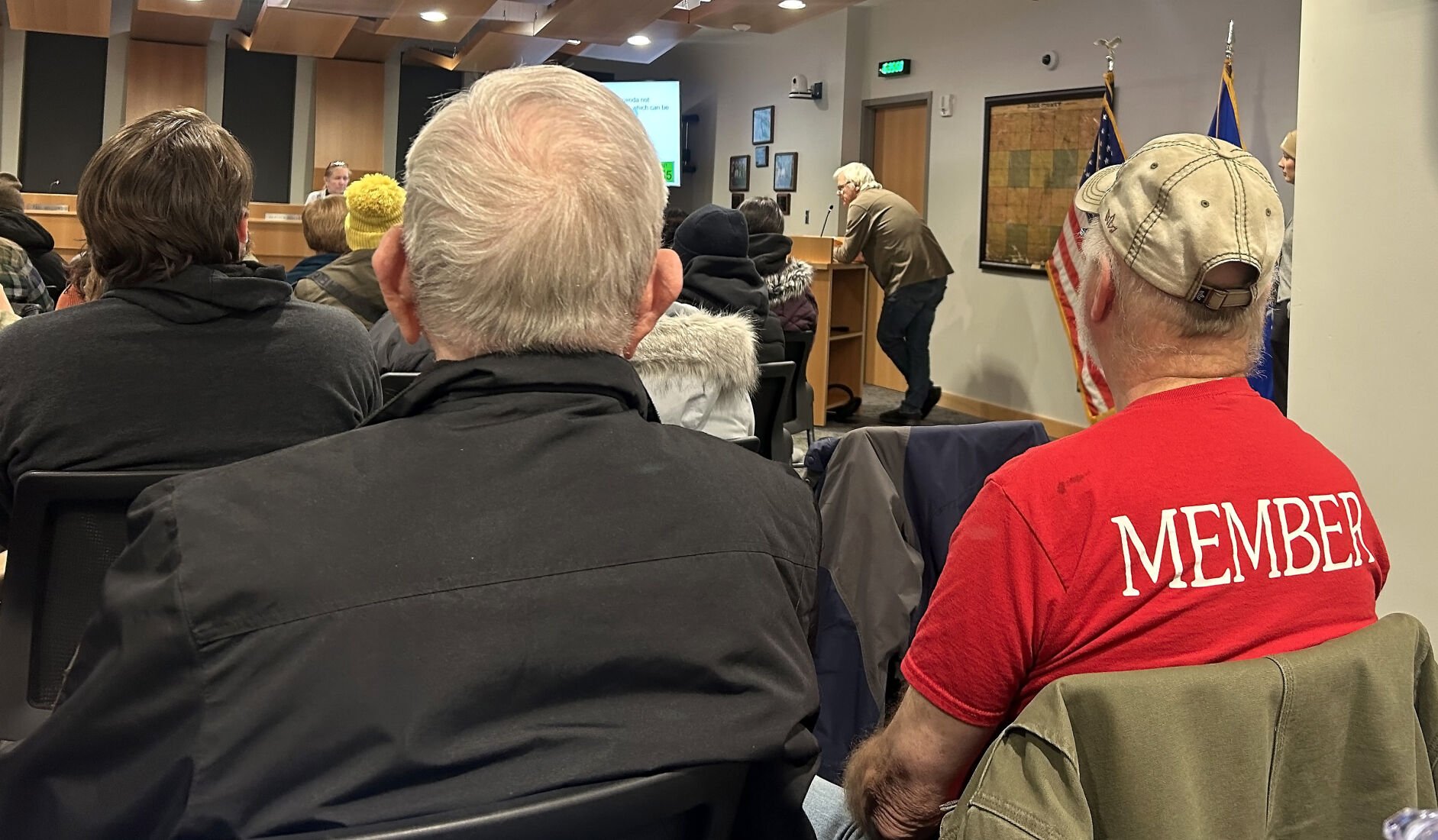
Janesville residents pack a city council meeting Monday, Jan. 26, 2026, at which the council weighed whether to bypass a second reading and public hearing on a proposed development ordinance for the southide GM/JATCO site, and whether to place the measure directly on the April 7 ballot. Both of those measures failed.
KYLIE BALK-YAATENEN/KYLIE.BALKYAATENEN@APG-SW.COM
Several council motions fell short, whose passage would have pushed forward the ordinance requiring any major future development on the southside site to be approved in a public referendum. That left the proposal to proceed to a first reading Monday night, and then to a formal public hearing on Feb. 9.
Two motions were made by council member Heather Miller and seconded by council member Josh Erdman. One would have waived next month’s second reading and public hearing. It failed 5-2 with Miller and Erdman voting yes. The second would have sent the ordinance directly to the April 7 ballot. It failed 4-3 with Miller, Erdman and Michael Cass voting yes.
The ordinance, backed by the grassroots coalition No Janesville Data Center, would if adopted require the council to submit any future development projects totaling $450 million or more at the city-owned, 250-acre GM/JATCO site to voters in a referendum.
Development barriers
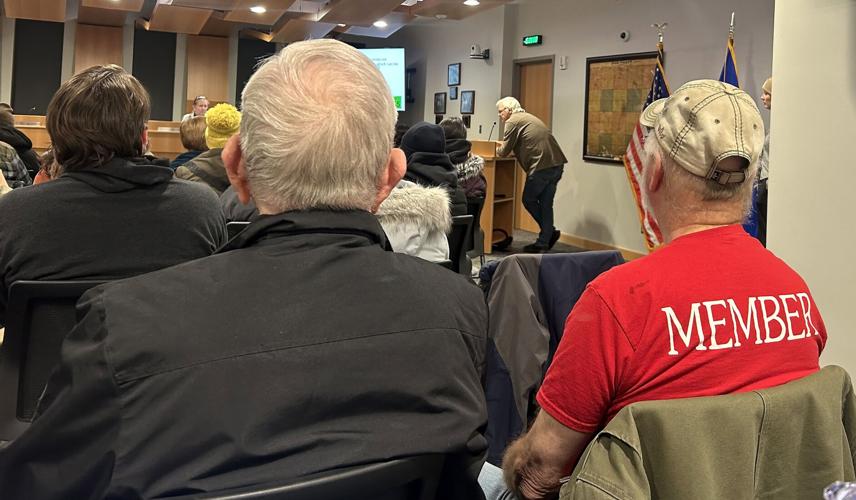
Janesville residents pack a city council meeting Monday, Jan. 26, 2026, at which the council weighed whether to bypass a second reading and public hearing on a proposed development ordinance for the southide GM/JATCO site, and whether to place the measure directly on the April 7 ballot. Both of those measures failed.
KYLIE BALK-YAATENEN/KYLIE.BALKYAATENEN@APG-SW.COM
Citing its size, former heavy industrial use and environmental remediation requirements, city staff argued in a memo that the ordinance, if adopted, would significantly limit redevelopment options for the site,
According to the memo, large-scale industrial projects approaching or exceeding 4 million square feet, consistent with the historic footprint of the former General Motors plant, would likely surpass the $450 million threshold based on construction costs alone.
Current industry estimates place new warehouse and light manufacturing construction at approximately $100 to $125 per square foot, while more specialized industrial facilities can exceed $150 per square foot, pushing total construction costs to an estimated $400 million to $600 million before infrastructure, remediation and other costs are included.
City staff said in the memo that developers operate in competitive site-selection processes where speed and certainty are critical, and that a referendum requirement would introduce delays and uncertainty incompatible with those timelines.
“Developers cannot reasonably be expected to hold site control, financing arrangements, environmental remediation commitments and construction schedules through an election cycle whose outcome is uncertain,� the memo states, adding that the requirement would “effectively remove the site from serious consideration for redevelopment.�
The memo concludes that the ordinance would act as a “compounding barrier� to redeveloping one of the city’s most complex industrial properties, limiting private investment and long-term tax base growth.
From a legal standpoint, City Attorney Wald Klimczyk advised council members that the ordinance is not explicitly a “no data center� ordinance, though it could have that effect.
“This seeks to curtail powers vested in the common council to legislate and conduct city business in a representative form of local government,� the memo states, warning that the ordinance could restrict future development beyond the current proposal and set unintended precedents.
Although not officially a public hearing, those who came to Monday night’s meeting were allowed to speak. Many came to “pack the council� and it was standing room only in the council chambers.
Cathy Erdman, of SNOW Janesville, said the aforementioned memo made the city’s stance clear, that if the citizens were to get a vote it would stymie any development on the site.
“The community submitted direct legislation to put your legislative body back on track after three years of advocating for basic citizen engagement,� Erdman said.
Janesville resident Alyssa Capozello said 4,600 people signing the petition to bring the ordinance before the council should be enough to show that the citizens want to be heard and don’t feel like the council is doing so.
“I am pro-Janesville. I am pro-community. I am pro-development, but that development needs to be responsible,� Capozello said.
Cassandra Pope, of Janesville No Data Center, said saying this would ruin the site’s chances for development is not true and said there is plenty of room under the $450 million ceiling for development projects that wouldn’t need a referendum.
“This ordinance does not limit or deter any reasonable development from that property,� Pope said. “It does, however, give the citizens of the city the opportunity to choose whether or not they want massive developments on this city-owned property.�
Council members expressed differing views on whether the issue should move quickly to voters or first proceed through a second reading and formal public hearing.
Miller argued that the volume of signatures reflected residents feeling excluded from the process.
“I think we have to look at the fact that 4,600 constituents came forward because they were unheard,� Miller said. “The only way to hear the people speak is to put it forward on the ballot. What are we afraid of?�
After Miller spoke she was met with audience cheers.
Other council members said bypassing a public hearing would undermine transparency.
“We need to have a second reading and a full public hearing on it,� Council member Paul Williams said. “There is no public hearing tonight as far as a noticed public hearing.�
Such thoughts were met with audience scoffing and loud calls to place the ordinance on the April 7 spring election ballot.
Council Vice President Larry Squire said delaying a referendum to a date beyond April would allow residents more time to learn about the proposal’s potential impacts.
“If we just say the group that showed up here tonight wins, that’s not good government,� Squire said. “We need to take the time to learn, listen and make sure everybody in this community has the opportunity to be fully informed.�
Opponents of a proposed data center on the GM/JATCO site have said that not placing the measure on the April ballot, instead delaying it until November, would reduce public influence during ongoing redevelopment discussions.
Council members can be contacted collectively at citycouncil@ci.janesville.wi.us. More information about No Janesville Data Center is available on the group’s Facebook page.
Sign up for our Daily Update & Weekend Update email newsletters!
Get the latest news, sports, weather and more delivered right to your inbox.