
JANESVILLE — The city of Janesville is aiming to make it easier and simpler to apply for a liquor license, and to set and enforce consistent standards for applicants and license holders.
The city’s Alcohol License Advisory Committee, that’s working on updating alcohol licensing ordinances, will meet Tuesday to continue that process.
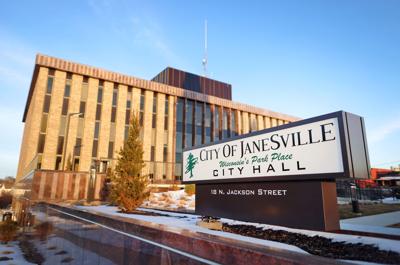
The meeting is at 8 a.m. in the council chambers at Janesville City Hall, 18 N. Jackson St.
City Council member Larry Squire, who serves on the committee, said the updates are overdue.
“It hasn’t been updated in a while,� Squire said. “We needed clarification and consistency. These policies have to be in the best interest of the committee and the community, and they have to hold people accountable.�
Squire said a simplified timeline aids everyone applying for bartending, special event or intoxicating liquor licenses.
“Most people applying for a license don’t do this every day,� he said. “We have to make sure the policy is manageable from both sides, that it’s easy to follow, and that the requirements can be understood.�
The updated ordinance lays out, for the first time, standardized criteria the city must consider when reviewing license applications, including neighborhood compatibility, public safety impacts, business plans and the qualifications of the owner and their designated corporate agent.
Applicants will now be required to attend both Alcohol License Advisory Committee and city council meetings in person and verbally acknowledge responsibility for any alcohol-related violations at their establishment.
Squire said the goal is to eliminate contradictions and ensure everyone involved, from city officials to business owners and servers understands the process.
“Part of this is making sure what’s going on can be followed and managed correctly,� he said. “That applies to the people making the applications and to the people operating the business.�
Operators, or bartenders, will also face more defined approval standards. The Janesville Police Department now has specific review criteria, and the city clerk must follow its recommendation.
Offenses such as recent alcohol or drug violations, falsified application information or repeated disorderly incidents can lead to denial. Applicants who submit incomplete information will have to wait six months before reapplying. Provisional licenses will no longer be issued to anyone who has ever been denied or revoked.
The ordinance also clarifies expectations for disorderly establishments. If businesses repeatedly experience fights, disturbances or other issues, the police chief will issue a written notice, prompting the Alcohol License Advisory Committee to review the case. A business that does not correct its problems could face suspension or non-renewal of its license.
“Compliance with state law has always been important, and our staff already does a great job with that,� Squire said. “What we’ve done here is condense everything down so it’s clear for all the parties impacted and the policies within them.�
One area the committee specifically sought clarity on was when exceptions may be granted for certain licensing requirements. Squire said the update gives the committee better guidance.
“The key part is making sure the committee knows when there is a need to review an exception,� he said. “We want a good, clean policy that guides how and when we do exceptions and how we do enforcement.�
The ordinance also adds new display rules for Class A license holders, such as grocery stores and gas stations, limiting alcohol displays to a contiguous, lockable area capped at either 80 or 40 square feet, depending on the business type.
Squire said the ultimate goal is to make the ordinance straightforward and fair.
“We want all policies to be consistent for the users and for the enforcers. It’s got to work for everybody,� he said. “These updates give us clear expectations. We’re not trying to make anything onerous or difficult; we’re trying to protect the city, the people and the businesses.�


